Biotech Engineering
Project Scheduling Software for Biotech & Life Sciences Teams
A biotech R&D schedule rarely slips because of weather or a supplier truck. It slips because an IBC or IACUC committee takes three weeks instead of two, a custom-synthesized reagent has an eight-week lead time no rush order can shorten, or an off-target safety gate sends a clone back to screening instead of forward to the next study. Maverick schedules the reagents, instruments, and research staff behind that work as first-class resources — not just a task list with names attached.
Try It FreeThe Biotech & Life Sciences Project Landscape
Every program below runs on the same mechanics — subproject hierarchy, three resource types, dependency links, milestones, baselines — but the constraint that actually threatens the finish date is different each time.
| Project Type | Real Constraint | How Maverick Models It |
|---|---|---|
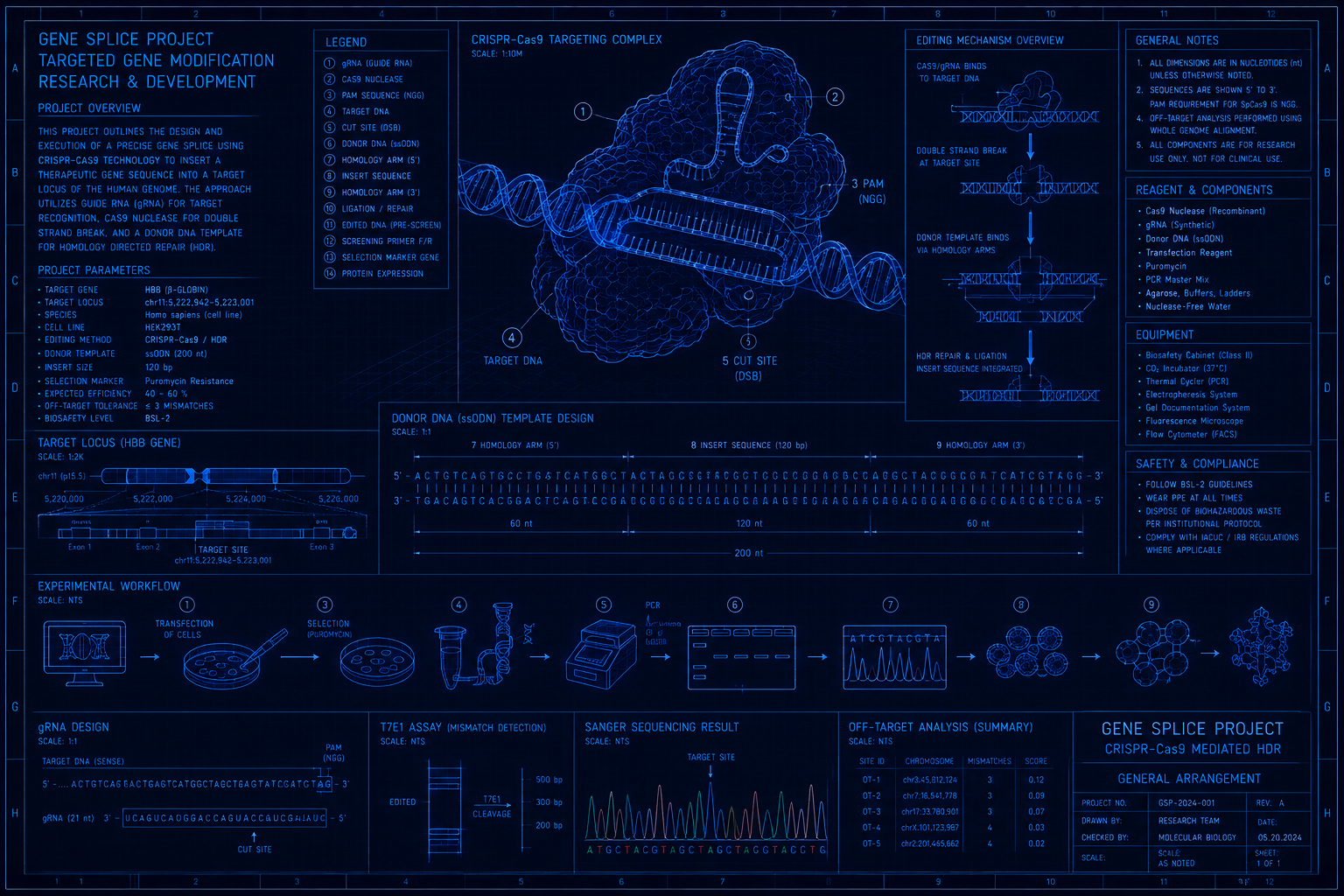
| Gene & Cell Therapy R&D | Custom gRNA/donor template synthesis lead times, an off-target safety QC gate, and a fixed biological observation window (e.g. xenograft engraftment) | Material resources for reagents, a Finish-to-Start link gating the QC milestone, critical path through the fixed-duration biological task — the pattern behind the gene therapy blueprint below |
| Biologics & Antibody Process Development | Upstream (cell line, bioreactor) and downstream (purification, formulation) stages run as parallel workstreams that must re-converge before fill-finish | Subproject hierarchy holds upstream and downstream as sibling phases, joined by a Finish-to-Finish link at the convergence point |
| Vaccine Development Programs | Antigen design, adjuvant formulation, and stability testing each have independent vendor lead times that rarely land on the same week | Each workstream tracked as material resources with independent durations, so a slipped stability-testing shipment is visible without stalling antigen design tasks |
| Preclinical Toxicology & IND-Enabling Studies | GLP study conduct is calendar-driven by animal facility availability, not by staff headcount, and a pre-IND regulatory package has its own internal review chain | Human resources model reviewer and study-director roles separately from the animal-facility milestone dates, so a review-chain delay and a facility-calendar delay show up as distinct causes |
| Clinical Trial Material (CTM) Manufacturing | A GMP tech transfer from R&D scale must pass a batch-record and QA sign-off before the first clinical lot can be released | A zero-duration milestone marks QA release as a go/no-go gate, with baseline tracking to document any variance for the batch record |
| In Vitro Diagnostic (IVD) Assay Development | Analytical validation (sensitivity, specificity, reproducibility) runs as repeated instrument-bound testing cycles ahead of a submission deadline | Machine resources for shared lab instruments surface double-booking across validation runs before it costs a testing cycle |
Wet-Lab Resources Are Not a Generic Task List
A research staff member, a shared instrument, and a reagent lot behave completely differently on a schedule — Maverick treats them as three distinct resource types instead of flattening them into one.
Three Resource Types, One Task List
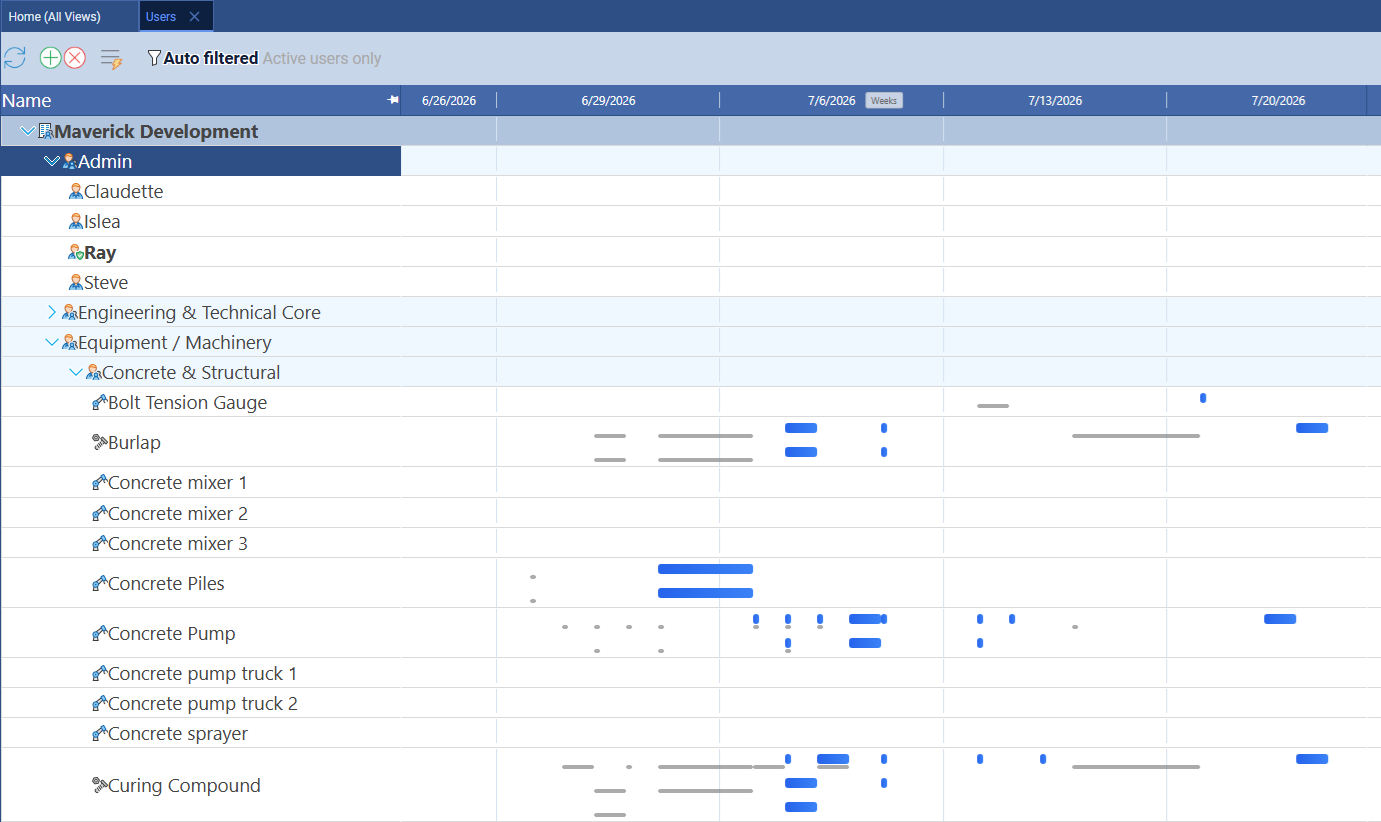
A principal investigator, a bioinformatics scientist, and a study director are Human resources. A thermal cycler, a flow cytometer, and a next-gen sequencer are Machine resources, shared across many tasks in short bursts rather than owned by one study. A gRNA lot, a donor DNA template, and a cell line stock are Material resources with quantities and vendor lead times. All three can be assigned to the same task and checked for conflicts on the same chart.
- Force-create staff, equipment, and reagents from a single paste
- Nested workgroups separate Research Staff, Lab Equipment, and Reagents
- Human resources consume license seats; Machine and Material do not
Catch a Shared-Instrument Conflict Before It Costs a Run
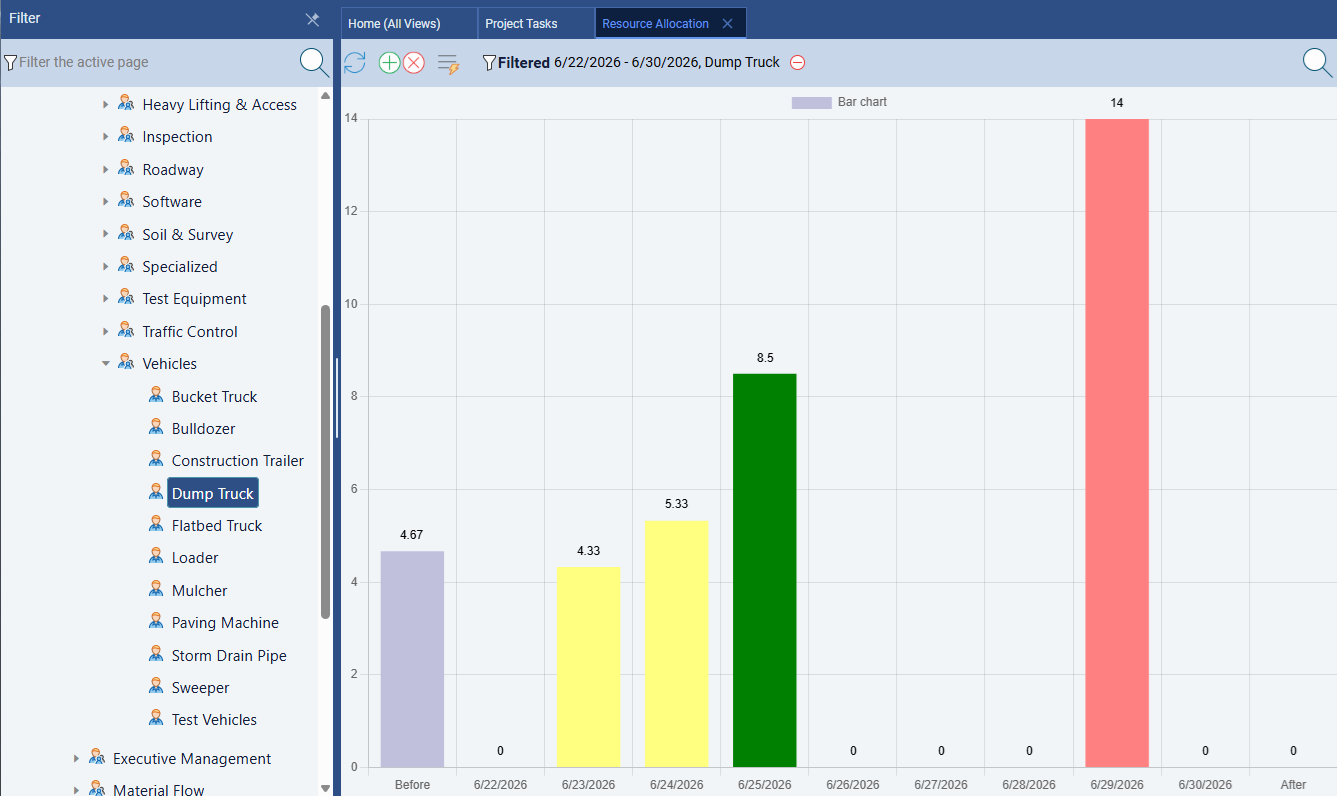
A single-point resource — the only qualified flow cytometry operator, or the one animal facility veterinarian on staff — can span weeks of a study across quarantine, monitoring, and terminal analysis. The resource allocation bar chart flags an overlapping double-booking in red before it turns into a missed sampling window, rather than after.
- Color-coded bars flag over- and under-allocated staff and instruments
- Filter by workgroup to check one core facility at a time
- Surfaces a conflict before the baseline is locked, not after
A Critical Path Through a Sequencer, Not a Crane
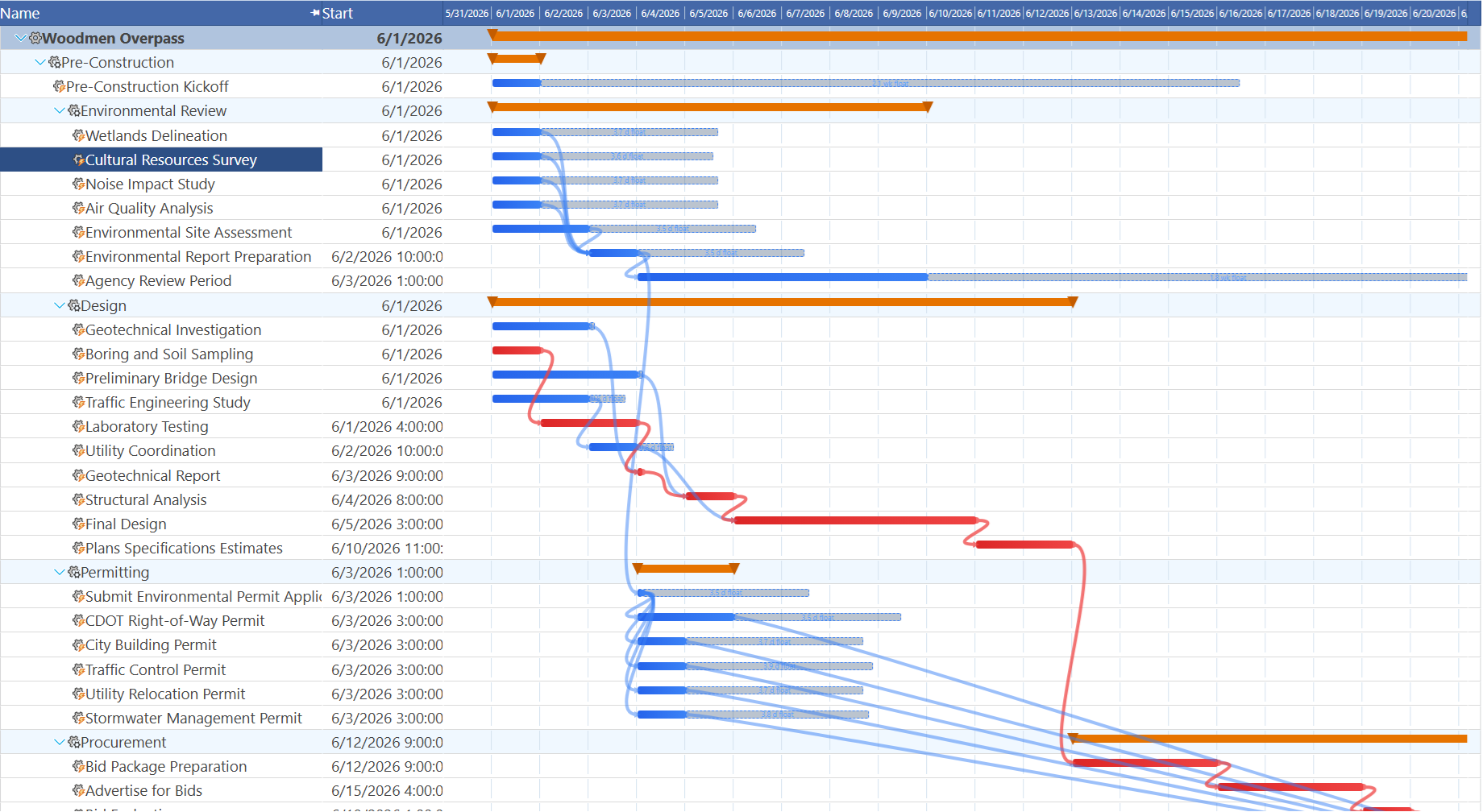
Recalculating the critical path on a research program often surfaces a chain running through NGS turnaround time and a fixed biological monitoring window — not a construction task. That distinction matters: a procurement lead time can sometimes be crashed with an expedited order, but a fixed observation period set by biology cannot be shortened by adding staff or working overtime.
- Four dependency link types model QC gates and study sequencing
- Instant recalculation as a committee review or assay run slips
- Separates a compressible lead time from a fixed biological window
Why a Generic Task Board Falls Short in a Regulated Lab
Kanban boards and sprint trackers are built for software tickets, not reagent lead times and committee review calendars.
| What a Study Needs | Generic Task Board | Maverick |
|---|---|---|
| Reagents and instruments as scheduled resources, not just task labels | Not available — a card can be "assigned" to a person, not tracked as inventory with a lead time | Material and Machine resource types with quantities, costs, and vendor lead times |
| A go/no-go safety or QC gate that blocks downstream work until it passes | Not available — columns move forward on manual drag, with no dependency enforcement | Finish-to-Start dependency links gate downstream phases behind a milestone |
| A locked baseline to document schedule variance for a batch record or audit | Not available — most boards have no concept of a historical plan to compare against | Project baselines lock the plan and track every later variance |
| Nested workgroups separating research staff, core facilities, and reagent stock | Limited — usually one flat team, not a resource hierarchy | Unlimited nested workgroups with per-resource type |
| License cost that scales with paid staff seats, not every reagent lot logged | Varies by vendor — often per active user regardless of role | Only Human resources consume a paid seat; Machine and Material do not |
Proof: A Real Preclinical R&D Schedule
One worked example, pasted into Maverick as a single tagged text block.
HBB Locus Correction Program — CRISPR-Cas9 Gene Therapy R&D
164 tasks across nine phases and eighteen nested sub-groups, 37 force-created resources split across Human, Machine, and Material types under three workgroups, a Finish-to-Start link gating clonal expansion behind an off-target safety QC review, and a critical path that runs through NGS turnaround and an 84-day xenograft engraftment window — not a construction task.
Walk Through the BlueprintReport Study Status Without a Maverick Login
Study directors, QA, and program sponsors usually want status outside the scheduling tool itself.
Power BI Dashboards
Build schedule health, timeline, and resource utilization dashboards from live project data, so a program sponsor or QA reviewer can check study status without logging into Maverick.
See the Power BI dashboardsLive OData Feed
Pull projects, tasks, resources, and costs directly into Power BI, Excel, or any OData v4 client via the built-in feed — all 11 entity sets documented with ready-to-paste M queries.
See the OData schema referenceCommon Questions From Biotech & Life Sciences Teams
What research operations and study teams ask before switching their scheduling.